
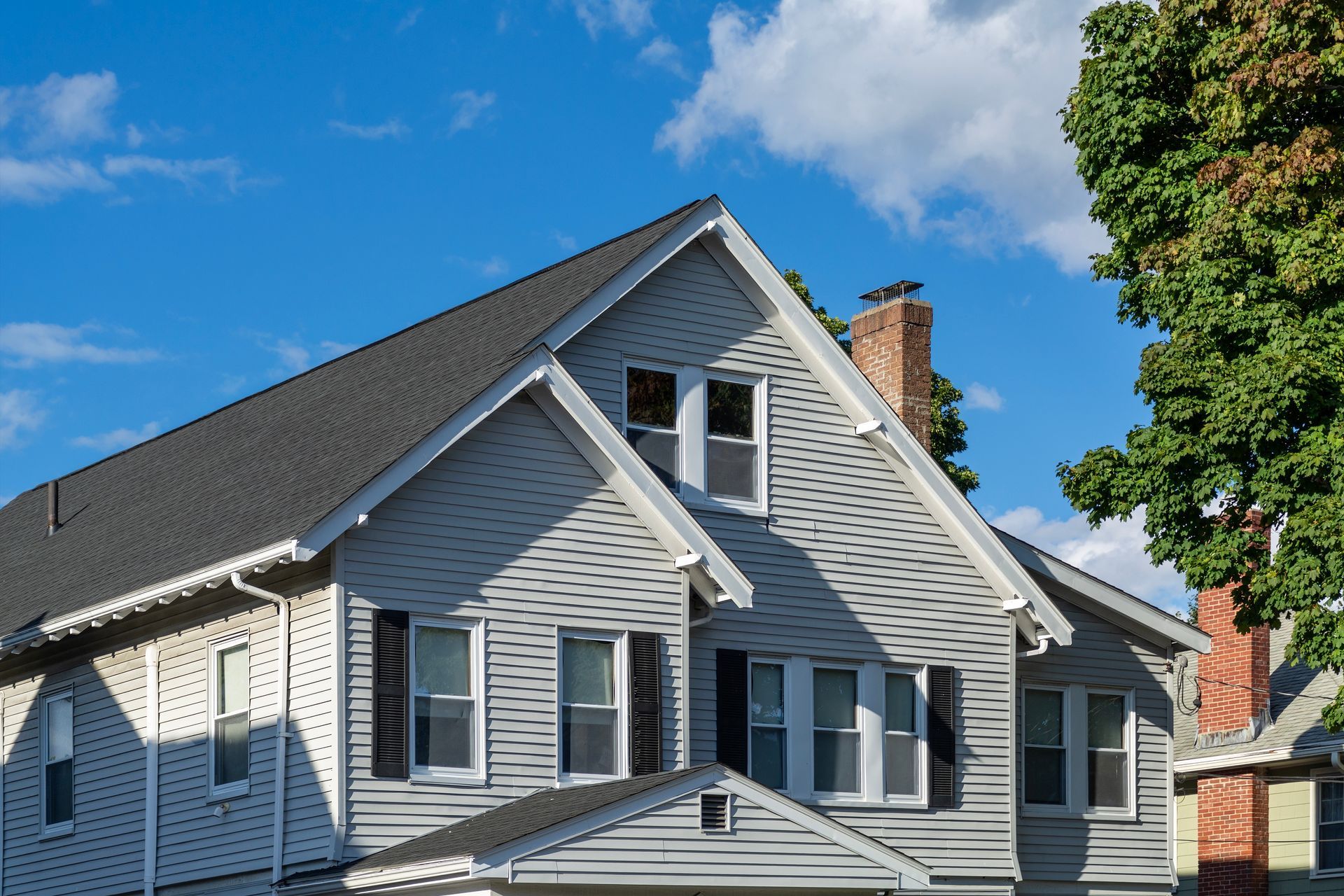
Siding That Stops Water at the Wall
Siding in Decatur for properties with corner board and J-channel deterioration from Indiana winters
Indiana's hard winters and spring hail season degrade siding at corner boards and J-channels first—the spots most crews overlook during a standard inspection. Water intrusion at these trim points leads to sheathing rot that compounds behind the siding, invisible until removal begins. Schwartz Advanced Roofing installs and replaces exterior siding for residential and commercial properties in northeast Indiana, including a sheathing-level moisture assessment before new material goes on to prevent hidden damage from continuing behind fresh siding.
The replacement process includes removing existing siding to inspect the sheathing layer for moisture damage, rot, or structural compromise that standard visual inspections can't detect. If the sheathing is compromised, it gets addressed before installation proceeds, preventing the new siding from trapping existing problems against the wall.
Arrange a property assessment to identify moisture intrusion points before siding replacement begins.
What Proper Siding Replacement Requires
Siding installation involves verifying that the wall plane is straight and that the sheathing provides a sound nailing surface, not just covering the existing wall with new material. Any areas where water has entered the wall cavity—typically at window trim, corner boards, or J-channels—are evaluated and repaired at the sheathing level before the new siding is applied.
Once the installation is complete, you'll see corner boards and J-channels with proper flashing integration that directs water away from seams, siding courses that align horizontally without waves or dips indicating uneven substrate, and trim work at windows and doors that overlaps correctly to shed water down and away from openings. Serving Decatur area properties including Riverside and West Jefferson Street corridor, Schwartz Advanced Roofing installs siding correctly from the wall out, not just as a material swap.
The scope includes removal of old siding, sheathing inspection and repair if needed, installation of new material, and trim work at all openings and transitions. It does not include interior wall repair if water damage has extended through the wall cavity—that requires separate coordination.
Questions Property Owners Have About Siding
Homeowners facing siding projects in northeast Indiana often need clarity on what the work involves and what it prevents after the job is finished.
What happens if moisture damage is found during siding removal?
If sheathing rot or water intrusion is present, those areas are repaired before new siding is installed—addressing the damage at the source prevents the problem from continuing behind new material.
How does Decatur weather affect siding lifespan?
Freeze-thaw cycles and wind-driven rain degrade corner boards and J-channels faster than flat siding surfaces, so those areas require attention during inspection and proper flashing during installation to extend overall siding lifespan.
What siding materials hold up best in northeast Indiana?
Vinyl and fiber cement both perform well if installed correctly, but fiber cement resists hail impact better and doesn't expand and contract as much during temperature swings, reducing fastener stress over time.
When should siding be replaced instead of repaired?
If corner boards are soft, J-channels show cracking, or multiple courses have separated from the wall, replacement prevents ongoing water intrusion that accelerates sheathing damage and drives up repair costs later.
How long does a siding replacement project take?
Most residential siding replacements take one to two weeks depending on house size and sheathing condition, with additional time required if structural repairs are needed once the old material is removed.
Schwartz Advanced Roofing serves residential and commercial properties across northeast Indiana with siding installation that addresses hidden moisture problems before they become structural issues. Schedule an inspection to evaluate your property's sheathing condition and siding integrity.